Enclosures
Snap-fit electronics housing
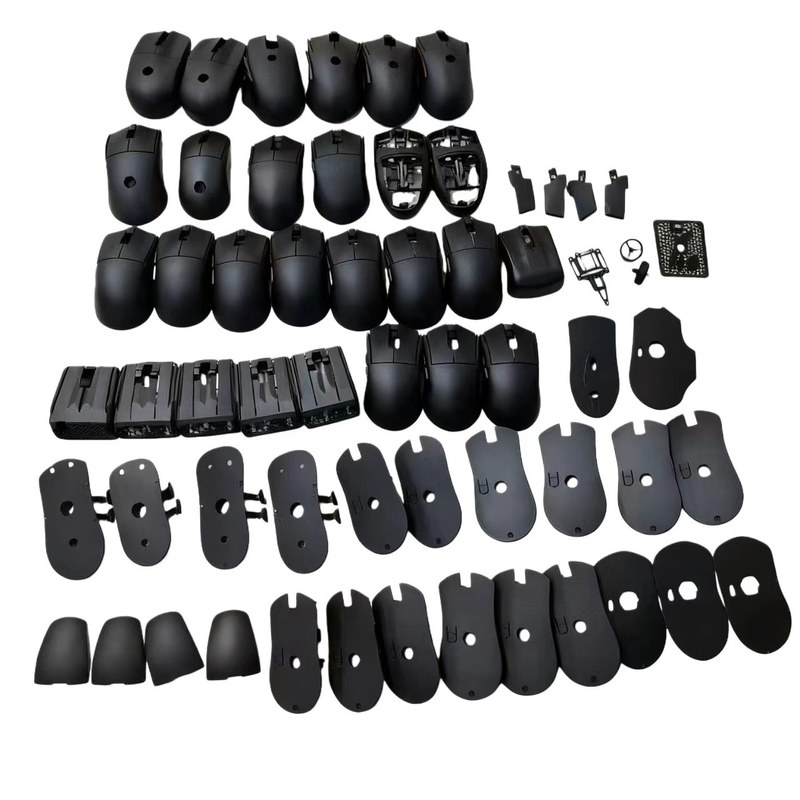
Living snap features, a button aperture and a screw boss all printed as one part, so the assembly has fewer components than the injection version.
Ask about this part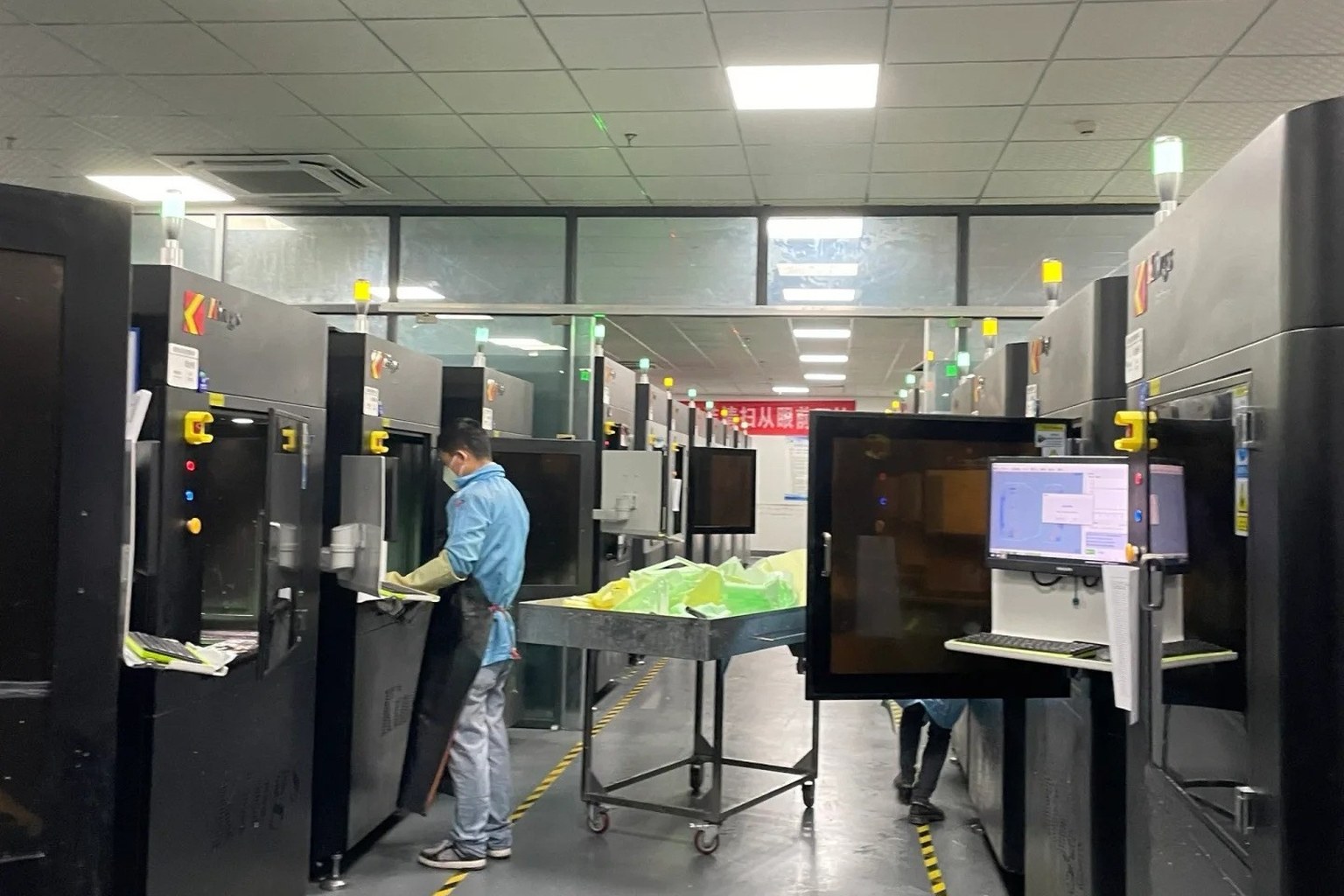
3D printing
SLS and MJF printing in PA12, glass-filled PA12 and PA11 — from a single piece to a few thousand, with no tooling to pay for and no minimum order.
Where printed parts earn their keep
Every one of these was printed because the geometry was too complex, the volume too low, or the design was still moving. The surface reads as a production part, not a prototype.
Living snap features, a button aperture and a screw boss all printed as one part, so the assembly has fewer components than the injection version.
Ask about this part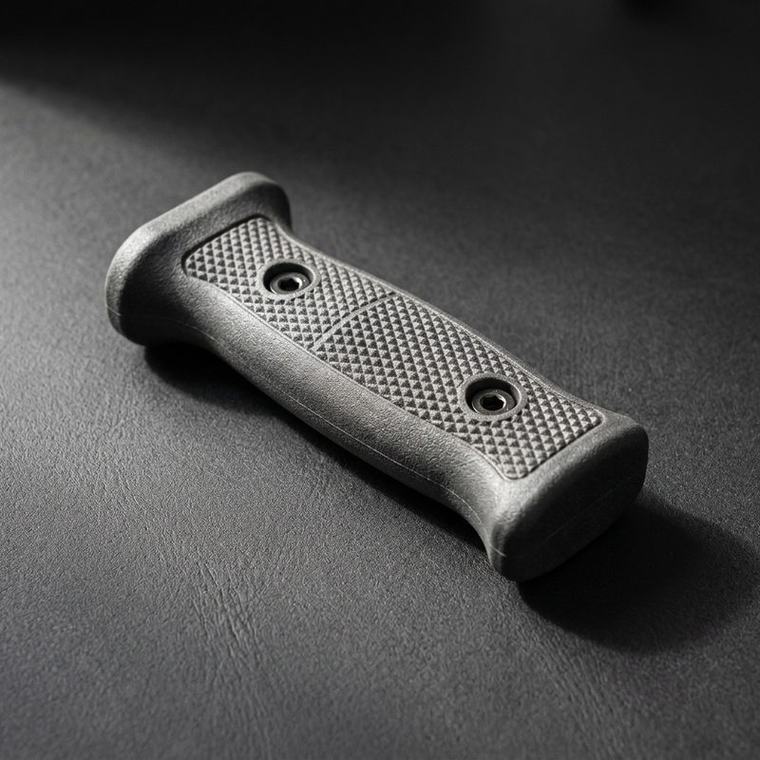
A coarse grip pattern printed directly into the surface, with bolt holes sized for a press-fit insert. No secondary texturing step.
Ask about this part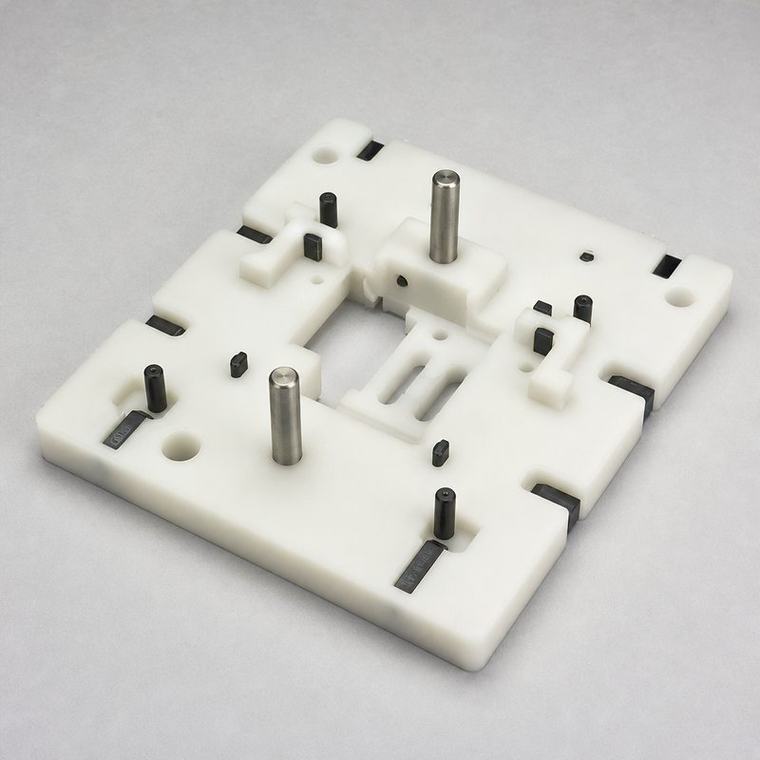
A locating plate with pressed dowels, turned around in three days while the line was still being built. Cheaper than machining one for a fixture that would change twice.
Ask about this part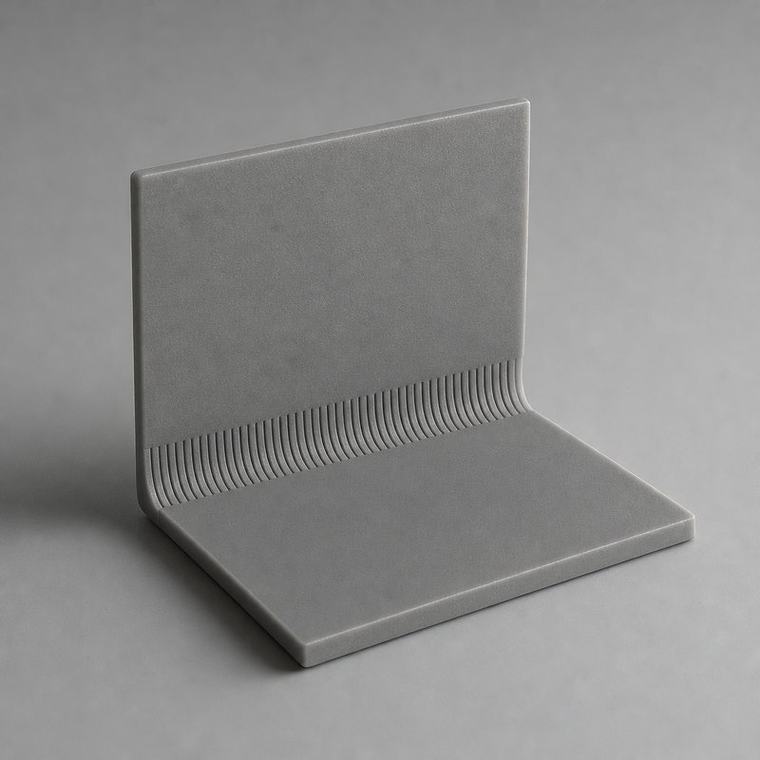
A 0.4 mm web printed in PA12 survives tens of thousands of cycles. Impossible to mould without a tool; trivial to print at twenty pieces.
Ask about this part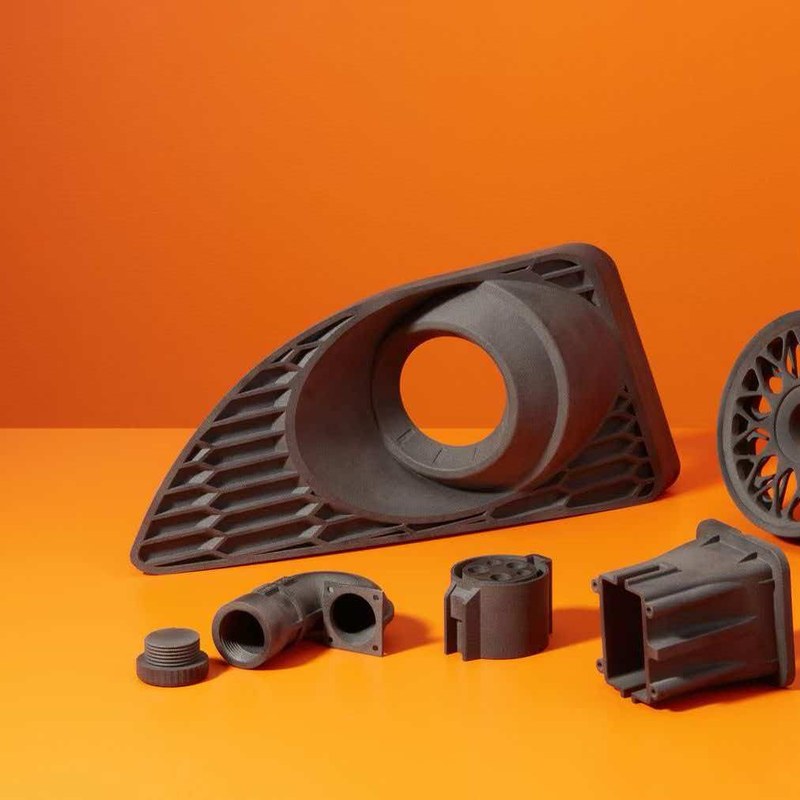
A smooth internal channel through a ninety-degree bend, which is exactly the geometry that makes machining expensive and moulding impossible.
Ask about this part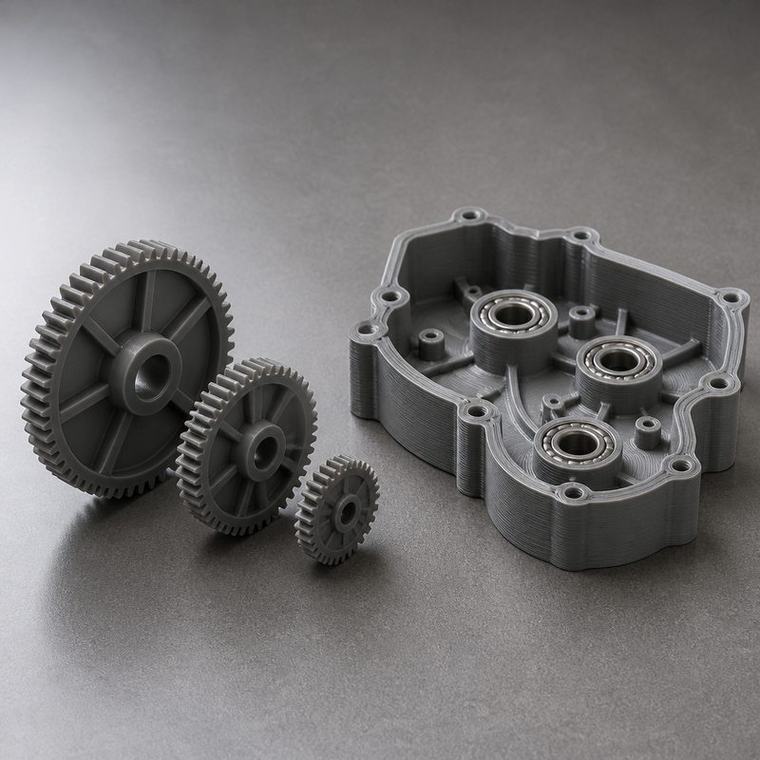
Spur gears and a housing half printed as a matched set, tested to failure, then reprinted with a thicker root before the customer cut steel.
Ask about this part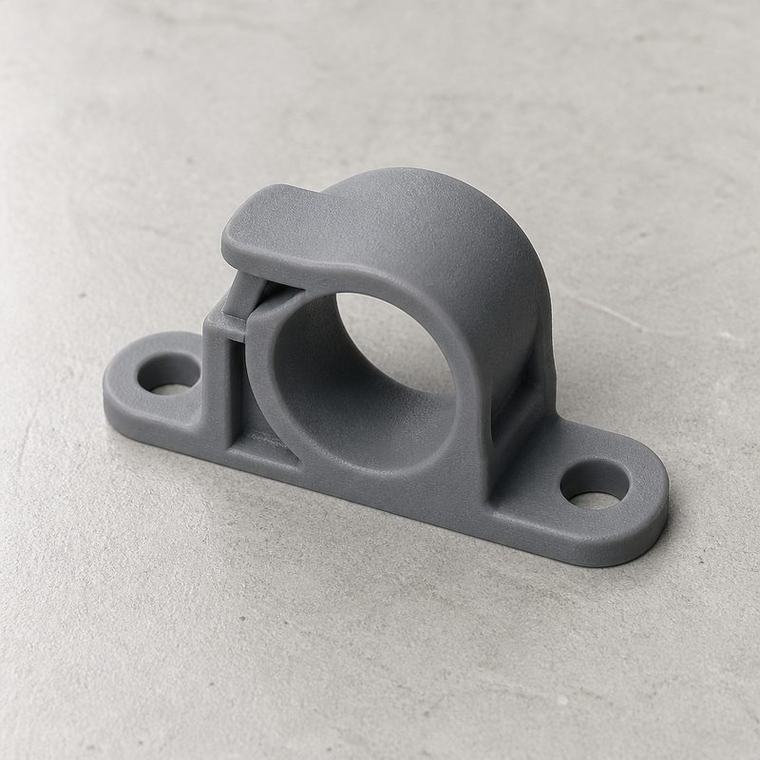
A jaw that opens and closes thousands of times without cracking, printed in PA11 rather than PA12 because impact strength matters more here than stiffness.
Ask about this part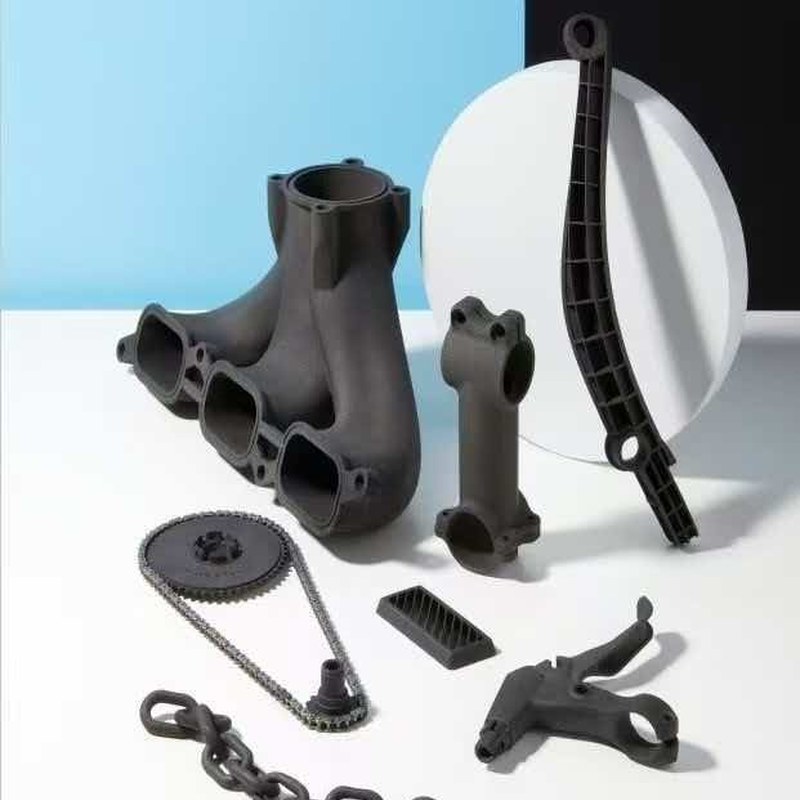
Three ports and internal channels that would need plugs and cross-drilling if machined, printed as one sealed body with no assembly to leak.
Ask about this part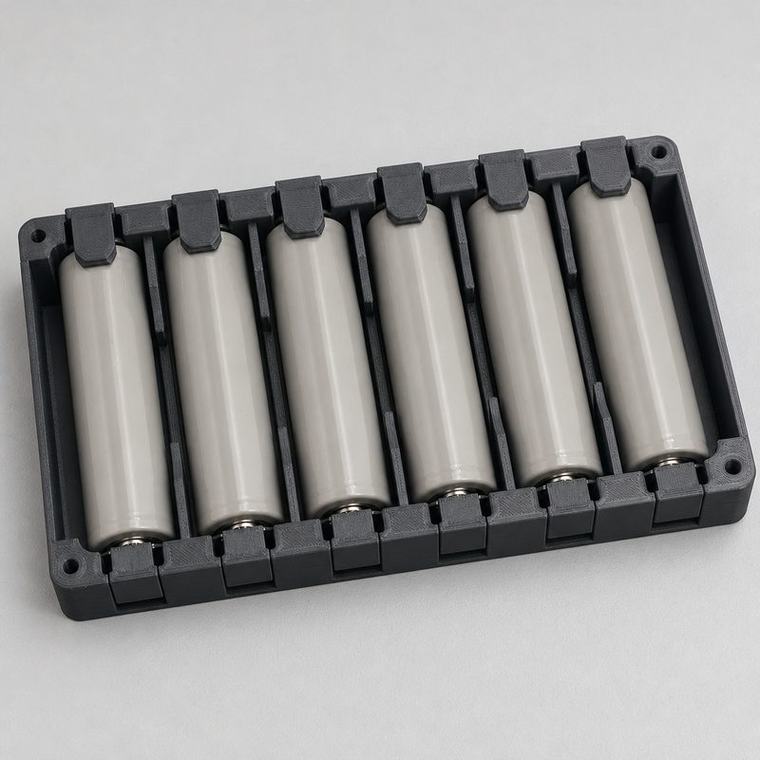
Six cells seated in moulded cradles with integral retaining clips, printed the same week the rig layout changed for the third time.
Ask about this part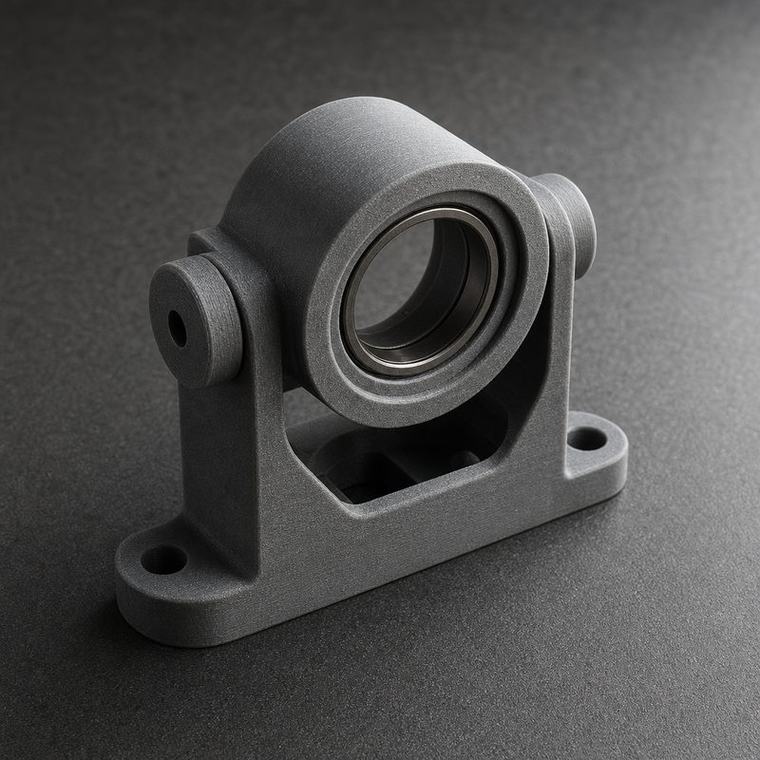
A bearing seat and two mounting ears in a single printed part, stiff enough that the image stays steady at 200 mm focal length.
Ask about this part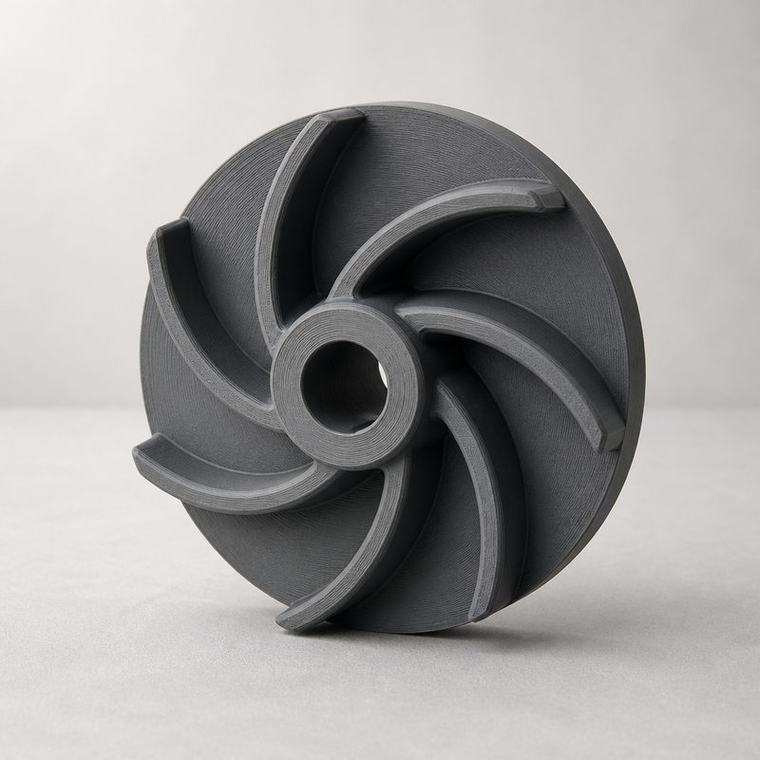
Six curved vanes, balanced by hand after printing, running in a low-pressure transfer pump where a machined metal impeller would have been overkill.
Ask about this part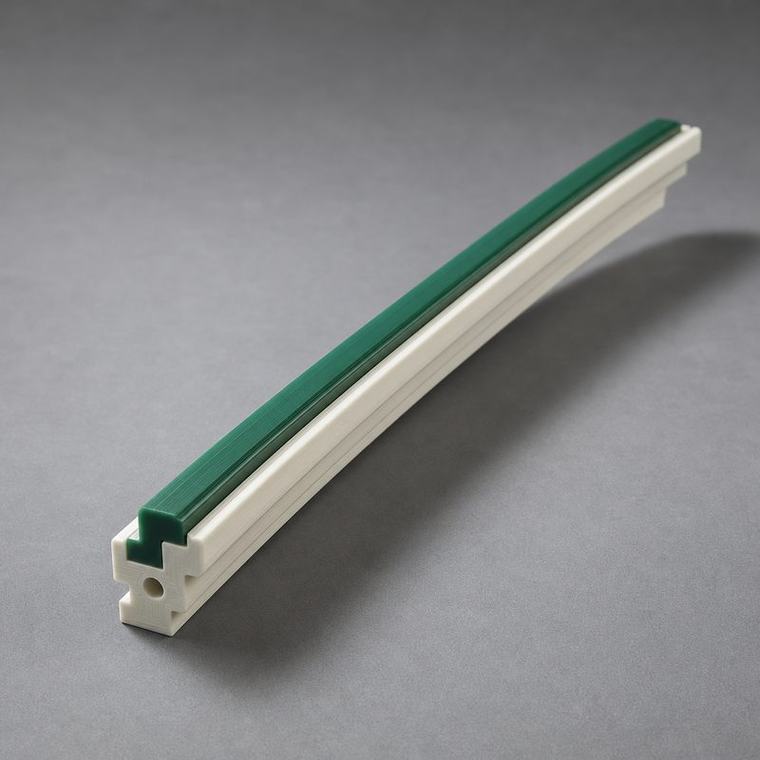
A low-friction PA12 profile printed in three-metre sections, so a line could restart the day the original strip wore through instead of waiting on an order.
Ask about this part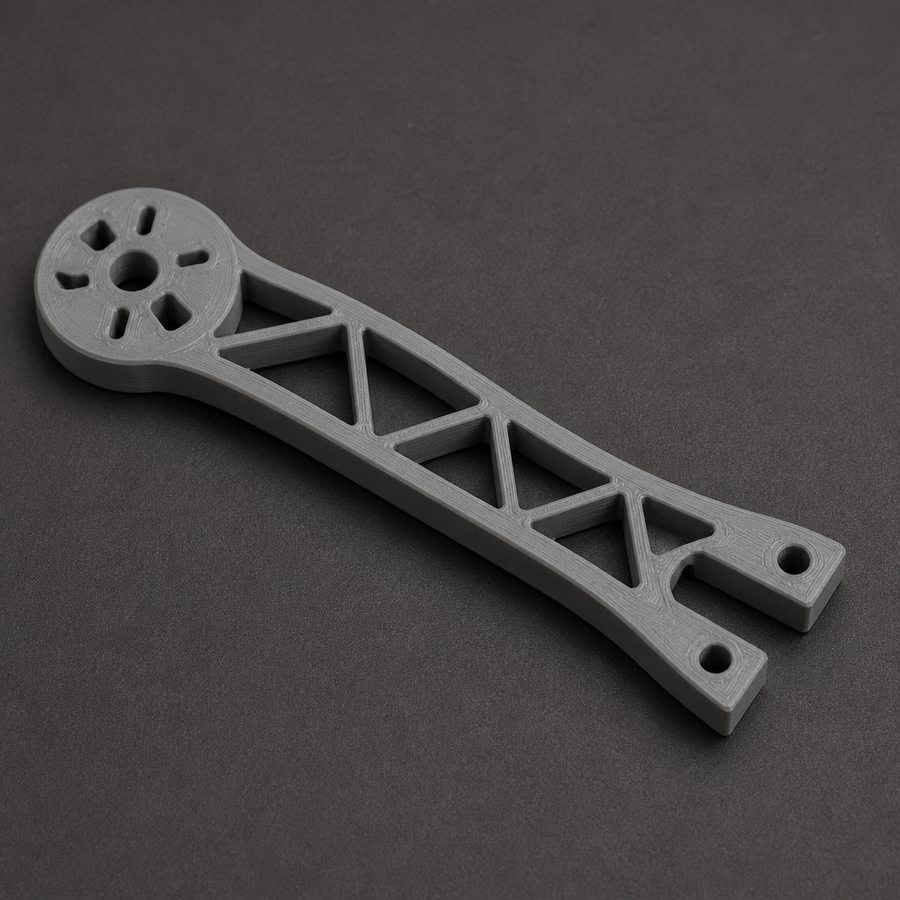
What printing changes
Tooling forces you to be right the first time. Printing does not. That is not a licence to skip design review — it is permission to test the version you are unsure about, which is usually the version that decides the project.
Six additive processes
Most suppliers run one technology and quote everything through it. We run six, so the process gets picked for the part — not for the machine that happens to be free.
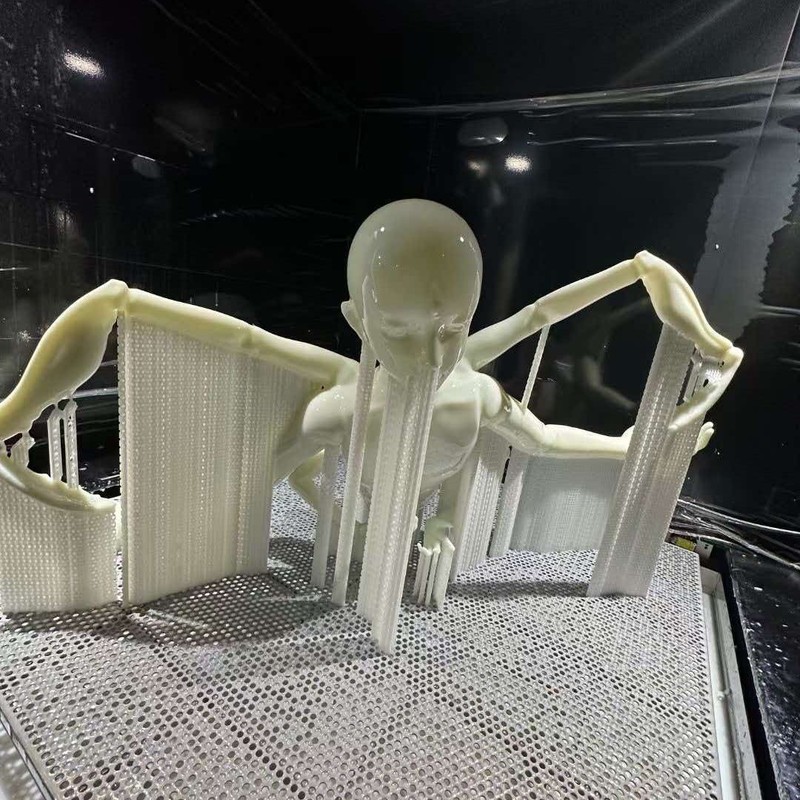
A laser draws each layer in a vat of photopolymer. It gives the finest surface of anything on this list, which is why our silicone mould masters are built on it rather than printed in nylon.
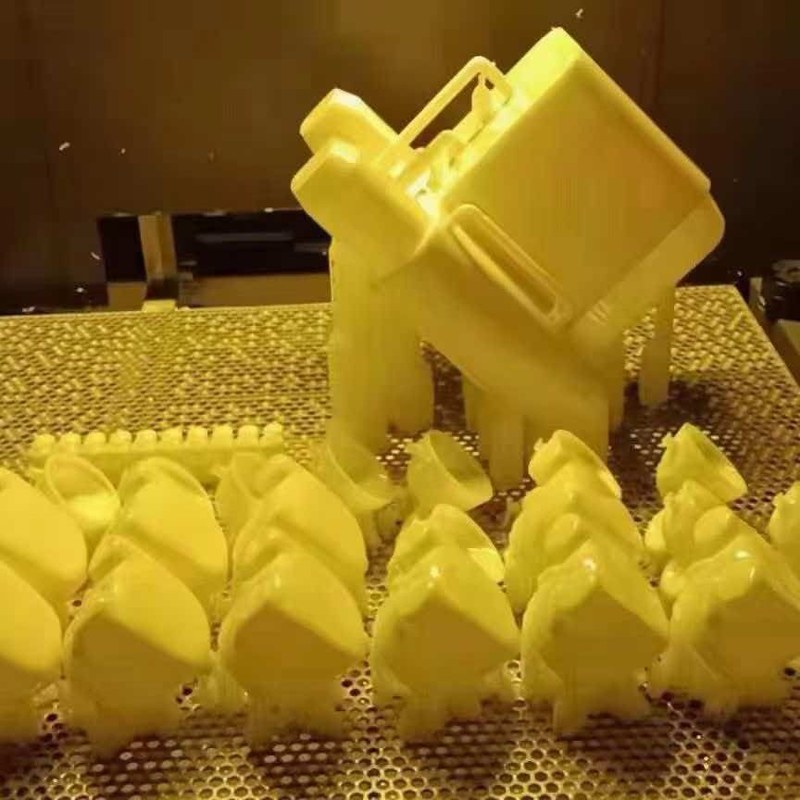
A projector flashes a whole layer at once instead of tracing it, so small batches of detailed parts come off faster than SLA. Same resin family, same limits on UV and heat.
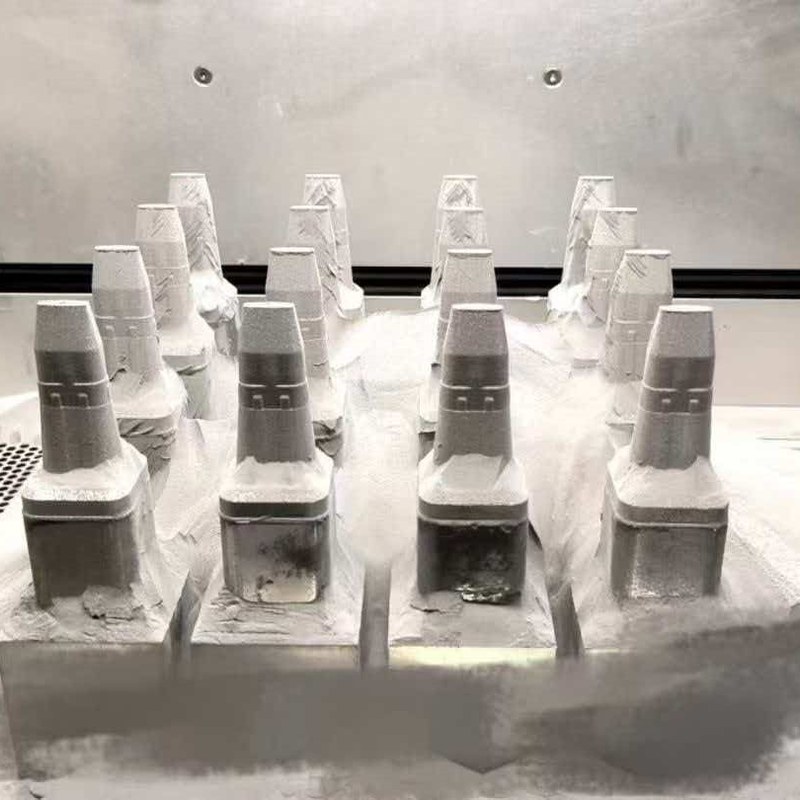
A laser fuses nylon powder that acts as its own support, so undercuts, living hinges and nested parts come out free. The default route for durable end-use parts from one piece.
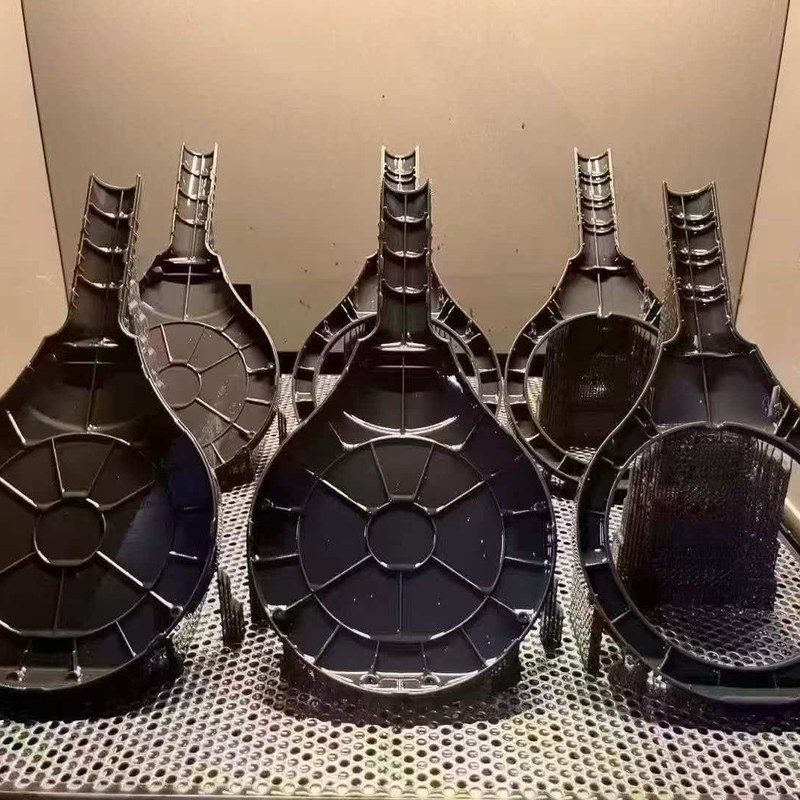
A fusing agent is jetted across the bed and cured with infrared, one full layer at a time. Smoother as-built walls than SLS and cheaper per part once a build is nested above roughly fifty pieces.
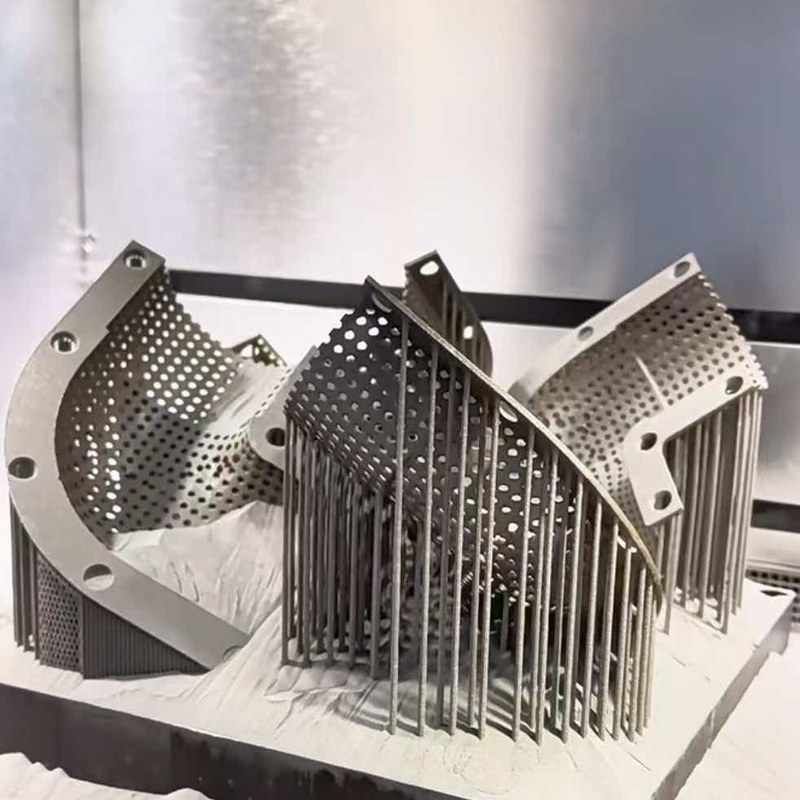
Laser-melted stainless, aluminium or titanium, built on lattice supports that are cut away afterwards. Parts are stress-relieved and support-removed before they are usable — budget for that, not just the build.
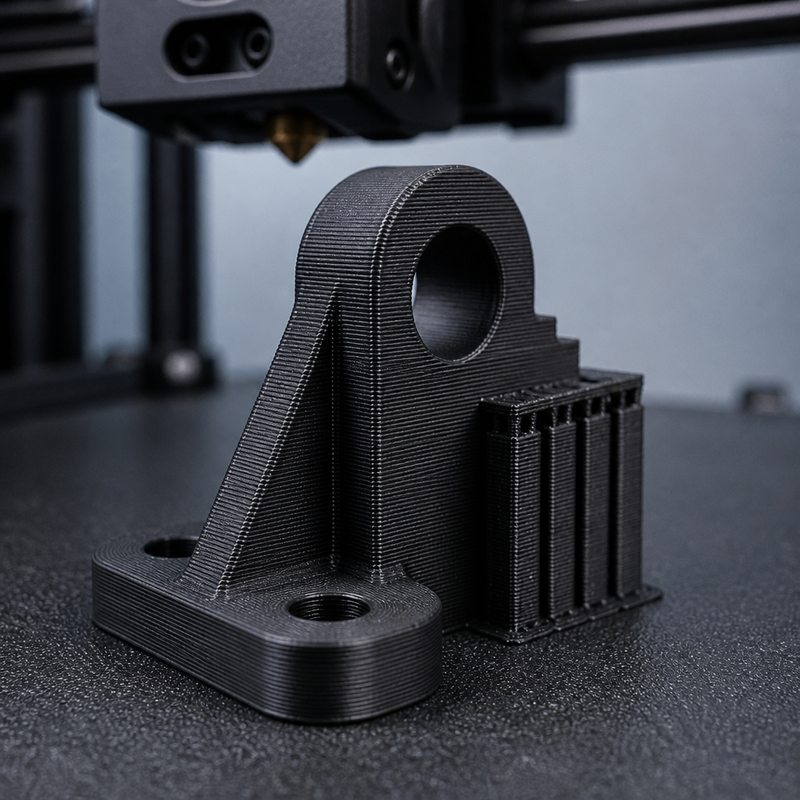
Cheapest way to hold a large, stiff part in your hand tomorrow, with layer lines you can see and feel. For a 600 mm jig or a formwork buck there is still nothing that competes on cost.
| Process | Material | Layer | Tolerance | Surface | Best for |
|---|---|---|---|---|---|
| SLA | Photopolymer resin | 0.05–0.1 mm | ±0.1 mm | Smooth, paintable | Masters, fine detail, clear parts |
| DLP | Photopolymer resin | 0.025–0.1 mm | ±0.1 mm | Smooth, fine detail | Small detailed batches |
| SLS | PA12, PA11, GF nylon | 0.1 mm | ±0.2 mm + 0.2% | Bead-blasted, matte | Functional parts, hinges, jigs |
| MJF | PA12, PA12 glass bead | 0.08 mm | ±0.2 mm + 0.2% | Smoother as-built | Cosmetic nylon above 50 pcs |
| SLM | 316L, AlSi10Mg, Ti64 | 0.03–0.06 mm | ±0.1 mm | Rough as-built, machinable | Metal brackets, RF, thermal |
| FDM | PLA, PETG, ASA, CF nylon | 0.1–0.3 mm | ±0.3 mm | Visible layer lines | Large formers, jigs, checks |
SLS or MJF
| Parameter | SLS | MJF |
|---|---|---|
| As-built surface | Bead-blasted, slightly rougher | Smoother, finer grain |
| Tolerance | ±0.2 mm + 0.2% | ±0.2 mm + 0.2% |
| Typical lead time | 3–5 days | 4–6 days |
| Strength consistency | Good, some Z-axis variation | More uniform across axes |
| Best at | Cheap functional parts, jigs | Cosmetic and production-intent parts |
| Unit cost above 50 pcs | Lower | Lower with nesting |
Questions
Below about 20 pieces SLS is usually cheaper because there is no nesting labour. From roughly 50 pieces up, MJF nested across a full build bed wins on unit cost, and the surface is better as well. Send the file and both are quoted so the crossover is visible.
Yes, in black, grey, white and custom shades. Dye penetrates roughly 0.1–0.2 mm, so a scratch on a heavily loaded edge can reveal the lighter core. For a colour that has to survive handling, casting or painting is the better route.
Tolerance is ±0.2 mm plus 0.2% of dimension, which is fine for most fits but not for a press-fit bearing seat. For bores under 5 mm we leave stock and ream after printing, or design the bore to take a machined insert.
Thin flat sections above about 150 mm can bow as the part cools outside the bed. Adding ribs, thickening to 2.5 mm, or orienting the part differently in the build solves most cases, and it is cheaper to change the design than to fight the process.
Start with what the part has to survive. Needs to look perfect and be painted: SLA or DLP. Needs to work and take a knock: SLS, or MJF if the surface matters. Has to be metal: SLM. Is large, rough and needed tomorrow: FDM. Send the drawing and we will say which one we would quote, and why.
Yes, by SLM in 316L stainless, AlSi10Mg aluminium and Ti64. Metal parts arrive on lattice supports and are stress-relieved and cut free before inspection, so the quoted price includes that work rather than hiding it as an extra.
Capability figures reviewed 11 月 2026.
