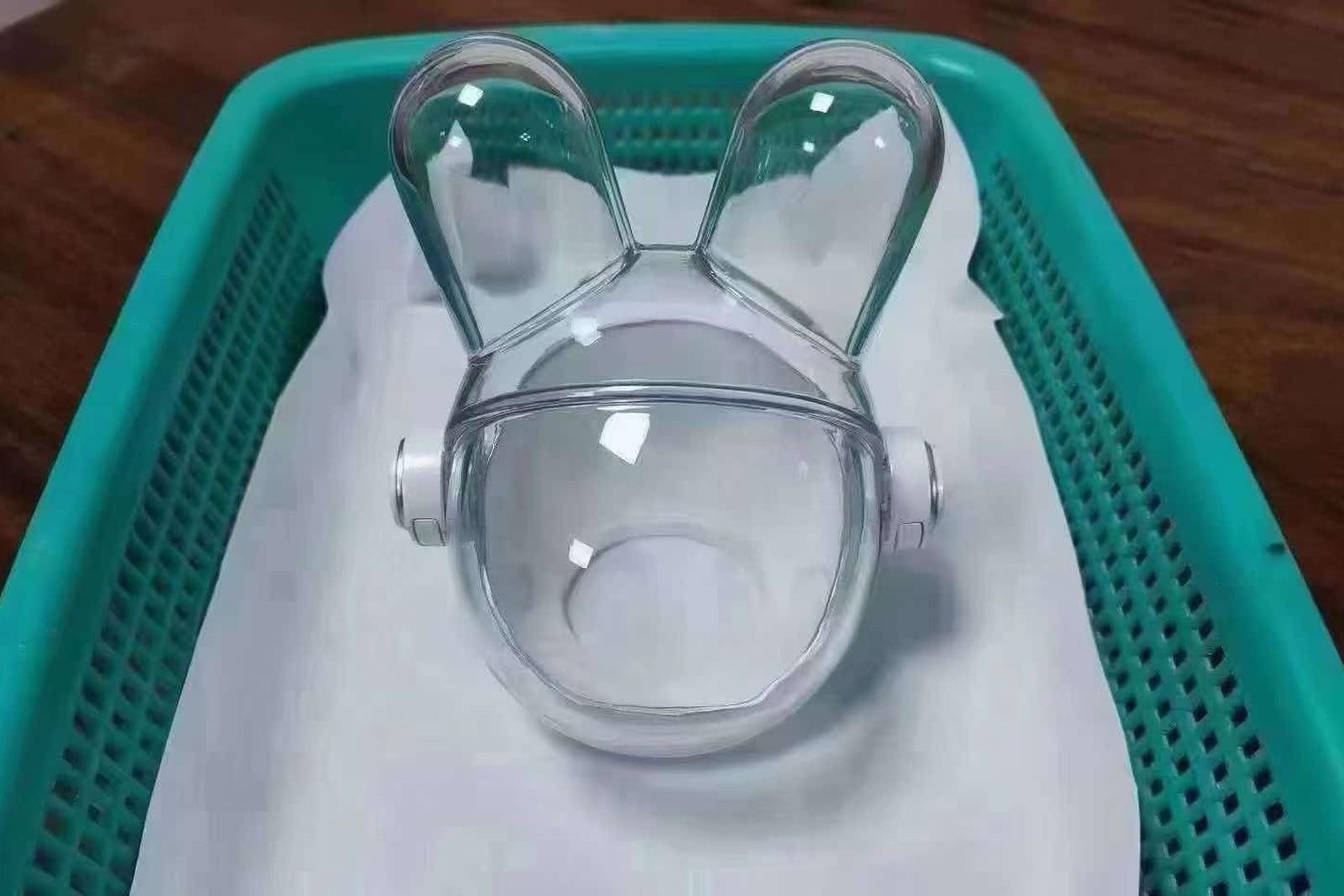
Water-clear casting
Castings that pass light, not only inspection
Clear polyurethane for lenses, light pipes, domes and windows — cast under vacuum, UV-stabilised, and measured for transmission rather than judged by eye.
The problem with clear
Clear resin is the least forgiving material we cast
An opaque part hides a bubble, a weld line or a polish mark. A clear part shows all three, and then keeps changing: urethane oxidises under UV and the thickest section yellows first.
So we treat clarity as a measured property, not a look. Cast under vacuum to pull entrained air, specify a UV-stabilised grade, and report transmission at both the thinnest and the thickest section of the same part — because one number hides the other.
- Vacuum degassing before pour, not just a slow mix
- UV-stabilised grades for anything that sees daylight
- Transmission measured at 2 mm and at the thickest rib
- Haze and Δb reported separately from transmission
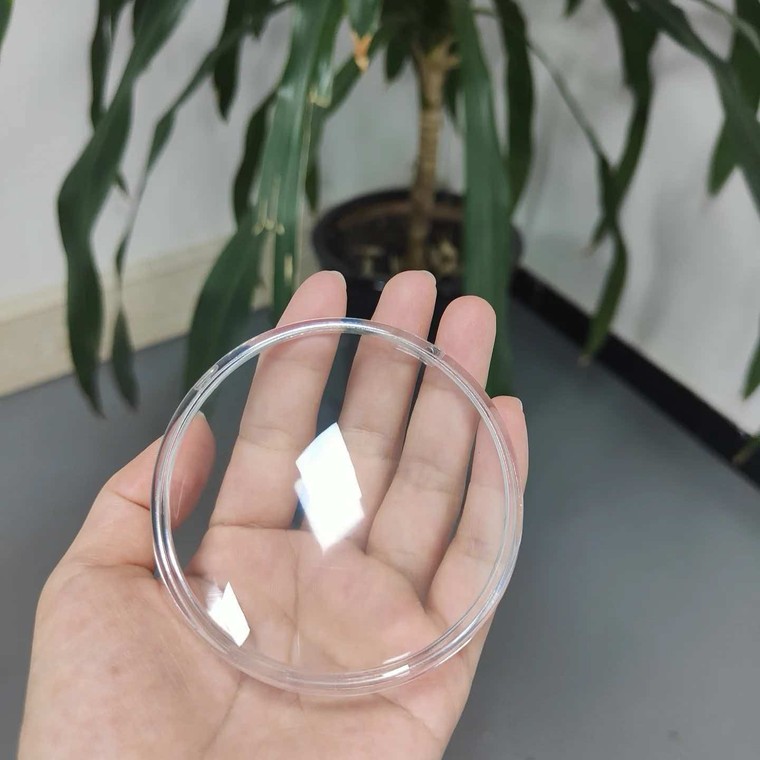
Grades
Three clear systems, three jobs
Choose by what the part has to do, not by what it looks like on a shelf.
| System | Transmission at 2 mm | UV package | Use it for |
|---|---|---|---|
| Standard clear PU | 88–90% | None | Internal light guides, parts seen only indoors |
| UV-stabilised clear PU | 88–90% | HALS + absorber | Lenses, windows and domes specified to Δb ≤ 2.0 after QUV |
| Optical clear, slow cure | 90–92% | HALS + absorber | Light pipes where the edge glow must stay even along the length |
Transmission is quoted at 550 nm through a 2 mm section under D65. If your drawing specifies a photometric curve, send it — it changes the resin choice, not the mould.
Where it works
Parts that are usually cast clear
Automotive lenses
Indicator and tail lenses, fog lamp covers and heritage parts where the original tooling is gone. We scan the sample, print a master, polish it and cast.
Light pipes and guides
Edge-lit guides for control panels and appliance indicators. Bubbles and flow lines show up as hot spots, so these run slow-cure with vacuum degassing.
Domes and windows
Sensor covers, machine guards and display windows. Often the requirement is impact resistance plus clarity, which points to a different grade again.
Limits
What clear casting will not do
Being straight about this saves a wasted tool. Clear PU is not optical glass, it is not scratch resistant, and it will not survive years of direct sun without a shift.
- Not a substitute for polished acrylic or PC in high-scratch applications
- Wall thickness above about 12 mm raises bubble risk sharply
- Deep undercuts make the silicone cut mark visible through the part
- Above roughly 200 pieces, injection moulding in PC or PMMA is cheaper
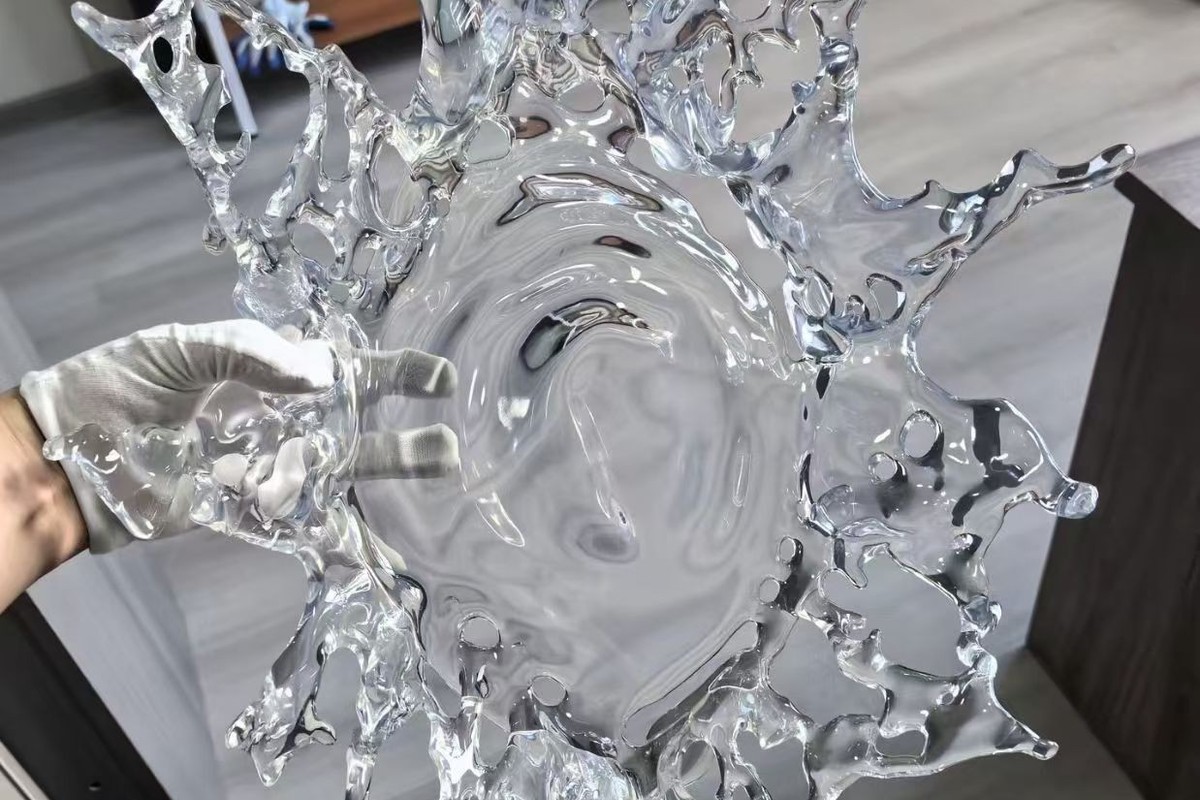
Questions
Clear parts, answered
What transmission can you actually hold on a clear casting?
88–90% at 550 nm through a 2 mm section on the standard UV-stabilised grade, and 90–92% with the slow-cure optical grade. Thicker sections always read lower, so we quote the figure at your actual wall thickness rather than at a nominal 2 mm.
Will the part stay clear outdoors?
A UV-stabilised grade held to Δb ≤ 2.0 after 72 hours of QUV will look unchanged through a product cycle, but no cast urethane is glass. Parts in permanent direct sun will shift after a few years, and we will say so before you commit to the tool.
Can you cast a lens from a broken original?
Yes. We scan the surviving fragment, rebuild the missing geometry, print a master, polish it and cast. Cosmetic clarity is achievable this way; true optical imaging quality is not, and for a lighting lens that distinction usually does not matter.
What is the smallest and largest clear part you can cast?
Practically, from about 15 mm across up to a 500 mm diagonal within our vacuum chambers. Walls thinner than 1.5 mm are hard to fill cleanly, and above roughly 12 mm the bubble risk rises sharply — both are worth testing with one master before a full run.
